
How Unbalanced Tires Can Affect Driver Safety

Most car owners know that driving on bald tires is unsafe. However, drivers may unknowingly put themselves and others by continuing to drive on bald tires for extended periods of time.
Safe driving requires motorists to consider themselves and others. Thus, if you believe your car tires are wearing down, you should get them inspected. If you are unsure if your tires need to be balanced, rotated, or replaced, you should keep an eye out for the signs of unbalanced tires. And if you notice any of these signs, you should get your tires checked out.
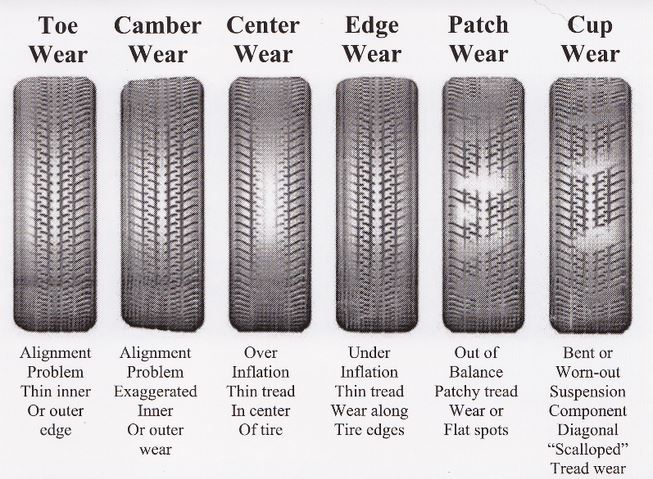 Image courtesy of Auto Geeze
The process of tires going from balanced to unbalanced tends to happen gradually over time, and it can difficult to identify unbalanced tires exclusively with a visual inspection. In addition, the symptoms of unbalanced tires are sometimes related to other factors. For example, uneven tread wear often results from failure to keep your tires properly inflated. If you notice one or more of the following problems while driving, it's time to have your tires checked:
Signs of Unbalanced Tires
When tires have little or no tread left, they can't grip the road properly, especially in wet conditions. This makes a car more susceptible to hydroplaning and skidding if you need to suddenly hit the brakes. Cracked tires and over- or under-inflated tires can also pose safety risks, as they are more susceptible to sudden blowouts. As tires wear down over time, they may start to crack; if cracking goes unaddressed for too long, a tire may burst while you're driving. Meanwhile, if a car's tires are inadvertently over- or under-inflated, the tires are prone to premature wear, increasing the risk of a blowout. There's another tire problem that often gets overlooked and can impact your vehicle's performance and your safety: unbalanced tires. A car's tires can become unbalanced if the weight of any of the four tires isn't evenly distributed around the wheel. Instead of delivering a smooth, consistent ride as you travel down the road, the tires may bounce, even on smooth, well-paved roads. This unwanted bouncing can lead to a number of problems that compromise the structural integrity of a tire and put your safety at risk.What Unbalanced Tires Can Do To Your Car
There’s a reason tire shops insist on balancing a car's tires when you put a new set on your vehicle: unbalanced tires are unsafe and cause many problems with the tires and your vehicle. These problems include:- Too much vibration. When all four car tires are properly balanced, there is minimal risk of vibration. But, when your tires are unbalanced, vibration increases throughout your vehicle.
- Uneven tread wear.One advantage of having balanced car tires is the tread wears down evenly (as long as you keep them properly inflated), so all four tires are in the same condition. Conversely, when your tires are unbalanced, certain areas of a tire can wear down quicker than they should.
- Long-term car damage.Unbalanced car tires can cause damage to different parts of your vehicle. For example, driving with tires that aren't properly balanced puts undue stress on your shocks, bearings, and wheel assembly.
- Increased fuel costs.Driving on tires out of balance may cause your fuel costs to rise. The faster you drive, the more out-of-balance tires will affect driving performance, further decreasing your fuel efficiency.
Symptoms of Unbalanced Tires
Image courtesy of Auto GeezeThe process of tires going from balanced to unbalanced tends to happen gradually over time, and it can difficult to identify unbalanced tires exclusively with a visual inspection. In addition, the symptoms of unbalanced tires are sometimes related to other factors. For example, uneven tread wear often results from failure to keep your tires properly inflated. If you notice one or more of the following problems while driving, it's time to have your tires checked:


